Whirlpool WRX735SDHZ03 Repair in Seffner, FL: Fixing the “Buzzing Compressor Noise” Issue
The Work Order
We received a call from a homeowner in the Parsons Pointe community of Seffner, reporting that their Whirlpool WRX735SDHZ03 French door refrigerator had started to make a loud, persistent buzzing noise from the back. The customer’s main concern was that the noise seemed to get worse after recent storms, but they weren’t sure if that was related. The refrigerator was otherwise cooling properly, but the sound was loud enough to be heard in the next room. In the Florida heat, and with summer thunderstorm season in full swing, keeping perishables reliably cool is paramount—so a fast response was essential for this service call.
The Diagnosis
Arriving on-site, we verified the unit: Whirlpool WRX735SDHZ03, a popular Energy Star model frequently found in homes throughout Seffner, especially in neighborhoods like Kingsway and Lake Weeks. The customer graciously powered off the refrigerator before our arrival, which is a good safety practice when dealing with unusual appliance noises.
Upon restoring power, the humming returned within seconds and grew louder as the compressor attempted to engage. First step of “technician logic”: isolate the noise. Using a mechanic’s stethoscope, we traced the vibration to the bottom rear—classic compressor or start relay echolocation.
Next step was visual inspection. Once we pulled away the kick plate and vent panel, a few issues became immediately clear:
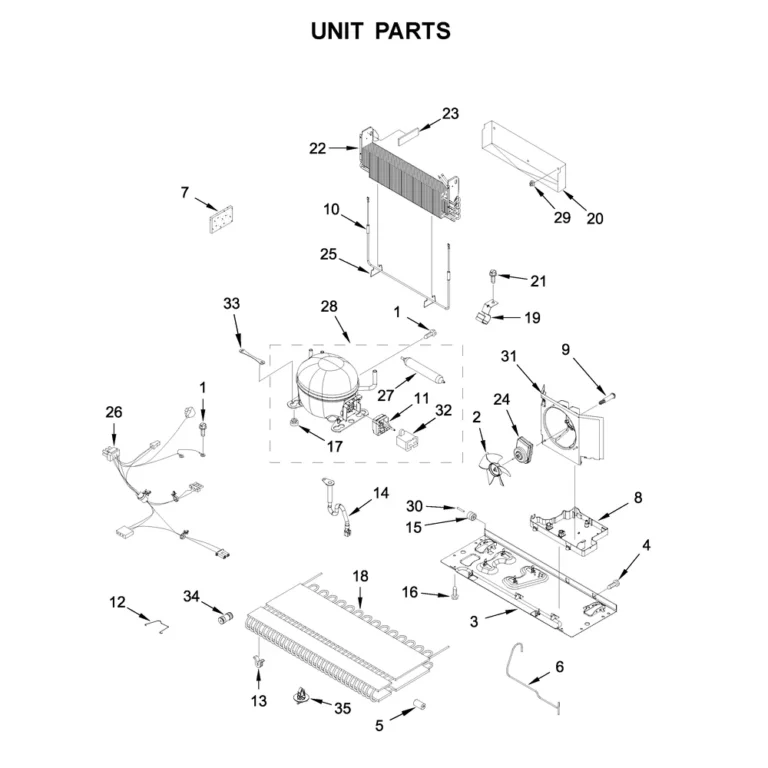
- The compressor (Embraco model FGS9C3K2EUN) was vibrating noticeably.
- The start relay (W10613606) emitted a hot, slightly singed odor—never a good sign.
- Condensation and scale around the evaporator drain—hard water mineral deposits—suggested Seffner’s notoriously mineral-rich municipal water had contributed to drain clogging and high moisture inside the compartment.
We checked for error codes on the control panel. Although the WRX735SDHZ03 doesn’t display compressor-specific faults on the user interface, Whirlpool service diagnostics (as per Whirlpool’s technical service manual) allows checking step-by-step: entering diagnostics mode, the only code present was “PO” (power outage), matching the recent storm. A multimeter confirmed the compressor still had proper resistance and wasn’t locked up, but the start relay showed inconsistent Ohm readings and signs of burnout—classic failure after a power surge.
The Fix
First, we documented all pre-existing conditions. The failed start relay was the main suspect—confirming with a new relay temporarily installed, we noted the noise subsided and the compressor started smoothly.
We replaced the original W10613606 start relay with the updated OEM part (W11123941). The new relay features improved surge-protection circuitry, crucial in Seffner and nearby areas like Mango, where frequent lightning strikes and brief power losses put extra strain on appliance components.
We cleaned the compressor base and surrounding area, removing mineral deposits to ensure proper airflow and reduce future strain on the start system. We also poured a cup of hot water with a descaling solution down the evaporator drain tube, clearing minor scale and ensuring future defrost cycles wouldn’t back up, drip, or freeze over. This is particularly important in local neighborhoods where hard water increases mineral buildup risk, leading to moist conditions that strain the refrigerator motor and relay.
After reassembly and retesting, the refrigerator cooled with only a faint, normal hum—no more buzzing. We monitored current draw with a clamp-on ammeter for five minutes and confirmed all readings were within manufacturer range. We then explained power surge risk and recommended a surge suppressor rated for refrigerators to the homeowner as a preventative step.
FAQ: Whirlpool WRX735SDHZ03 Noise Issues
Q: Is the buzzing noise on my WRX735SDHZ03 always caused by the compressor relay?
A: Not always, but it’s the most common culprit, especially in areas like Seffner prone to power surges and brownouts. Buzzing may also result from loose condenser fan blades, iced-over evaporator fans, or even objects caught near compressor mounts. If the noise starts after storms or power outages, faulty start relays or capacitor issues should be investigated first.
Q: Does Seffner’s hard water really affect refrigerator parts?
A: Yes! Seffner’s municipal water is considered moderately hard and leaves mineral deposits (limescale) throughout home plumbing—even refrigerators. Over time, this scale can clog the evaporator drain, contributing to moisture build-up. That extra humidity means the compressor and relay work harder, shortening their life. Flushing the fridge’s drain line annually with a descaling solution is a great preventative measure.
Q: Will using a surge protector void my fridge’s warranty?
A: Using a surge protector does not void the warranty. In fact, many manufacturers recommend it for areas with frequent storms. However, make sure the surge protector is designed for appliances (minimum 1000 joules rating) and doesn’t share outlets with other heavy appliances. This simple investment can help protect expensive electronics in your fridge’s control board and start relay from power spikes.
Final Thoughts
This repair highlights the perfect storm for appliance wear: Seffner’s humid, storm-prone summers, occasional power surges, and hard water conditions combine to add wear to refrigerator compressors and start systems. If your fridge in FishHawk Trails, Bloomingdale, or just down the road in Lake Weeks is beginning to make strange noises, don’t wait—early service avoids costlier repairs. For more refrigerator tips or to schedule a service call, visit Brandon Appliance Pros—your Seffner neighbors committed to keeping your kitchen running quietly and efficiently.