👨🔧 THE WORK ORDER
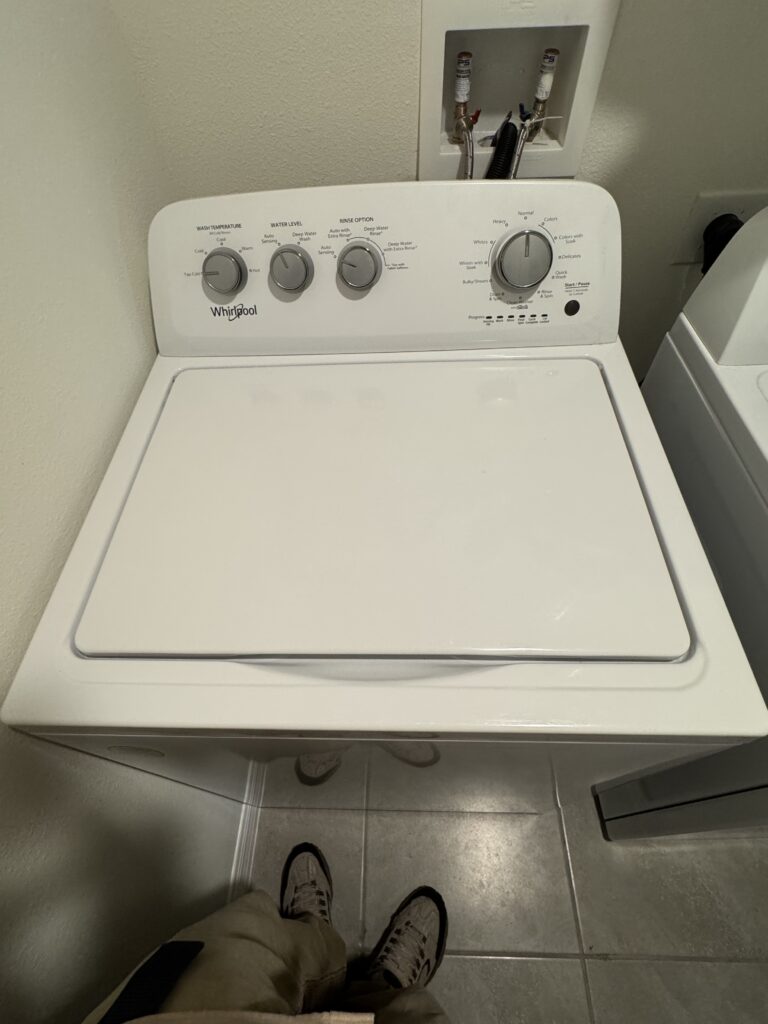
We received a call from a homeowner in FishHawk, FL. Their trusty Whirlpool WTW5000DW1 top-load washer was displaying an “F8 E1” error, also known as the “Low Flow” or “No Fill” code. The customer explained the machine would hum, try to fill, but then stop and flash the error code—leaving a pile of towels sopping in the tub. This is a common complaint in the Tampa area, especially in neighborhoods like FishHawk, Bloomingdale, and Valrico, where hard water and Florida’s infamous humidity quietly sabotage even the newest appliances.
THE DIAGNOSIS
When we arrived, our technician verified the error: the F8 E1 code appeared a few minutes into the cycle, and the washer drum had little to no water. This Whirlpool model is sensitive to water pressure and flow rates. Armed with a digital multimeter, a set of channel-lock pliers, and a wire brush, we set to work.
First, we checked the obvious: were both hot and cold water supply valves fully open? Yes. Were the supply hoses kinked or leaking? No sign of an outside blockage. But upon removing the water hoses from the back of the washer, we encountered the all-too-familiar culprit: a gritty, chalky buildup. Brandon-area water is notorious for elevated mineral content. The small mesh screens inside the washer’s water inlet valves were caked with limescale and sand—a classic symptom in FishHawk and Bloomingdale, thanks to our local municipal supply.
Before jumping to part replacement, we tested the water inlet valve’s solenoids with the multimeter, confirming they still had continuity (a good sign—the solenoids themselves hadn’t failed electrically). Next, we placed a bucket under the valve and briefly cracked open the water supply to measure flow. Water pressure burbled through sluggishly, loaded with grit—confirming that the real villain here was scale choking both the home’s plumbing and the machine’s sensitive intake system.
THE FIX
Once we pulled the hoses and removed the screens, the source of the flow problem became crystal clear. The wire mesh screens almost looked cemented shut with tiny rocks and chalky residue. No amount of rinsing could clear the blockages completely, so we replaced the screens with OEM parts (Whirlpool #W10292839). We also ran a robust descaling solution (SafeChoice Washer Magic) through the empty tub while bypassing the electronic controls, allowing the cleaner to dissolve internal scale inside the valve and inlet chamber.
This was the perfect time to explain to the homeowner that, in our region, municipal water supplies fluctuate in hardness due to seasonal rains and reservoir maintenance. Even on newer models like the WTW5000DW1, these mineral buildups are a silent killer, causing “low flow” errors, slow fills, and, eventually, valve failure. We advised the customer to flush their supply hoses annually and install a basic sediment filter or inline mesh at each faucet—a small investment.
After flushing and reassembling, we ran a diagnostic test cycle (hold the “Start” button and turn the dial per the tech manual) to clear the code. The washer filled quickly, with robust flow, and completed its cycles quietly—problem solved, with no parts needlessly replaced! This kind of local, targeted repair helps preserve the life of the unit and keeps appliances running efficiently in challenging Florida water conditions.
FAQ: Whirlpool WTW5000DW1 “F8 E1” in Florida
Q: Why does my Whirlpool washer keep showing the F8 E1 error, even after clearing it?
A: If you’re constantly battling the F8 E1 “Low Flow” code, Florida’s hard water likely keeps clogging the inlet screens or solenoids. Mineral deposits accumulate quickly in areas like FishHawk and Bloomingdale due to lime, sand, and even iron in local plumbing. Clean mesh screens every 6-12 months, and consider a water filter to reduce sediment. Continuous failure may eventually require a full valve replacement.
Q: Is it safe to use a commercial descaler in my washer, or can I just use vinegar?
A: Whirlpool recommends commercial, appliance-approved descaling solutions (never undiluted vinegar on rubber components). Products labeled as “Washer Magic” or equivalent dissolve scale without damaging hoses, seals, or the drum. Always run an extra rinse after cleaning to flush out residues.
Q: Do I need to replace the water intake valve, or just the screens?
A: In most cases, simply replacing or cleaning the mesh screens resolves low flow. However, if your WTW5000DW1 has recurring symptoms after maintenance, the valve solenoids may be internally clogged or electrically failed. Use a multimeter to check for continuity. Genuine Whirlpool valves are designed to handle Florida’s water better than cheap replacements—always use OEM parts.
If you live in FishHawk, Bloomingdale, or anywhere in Brandon, FL, don’t let local water destroy your appliances. Contact Brandon Appliance Pros for neighborly repair and expert maintenance advice tailored to our unique Florida conditions.